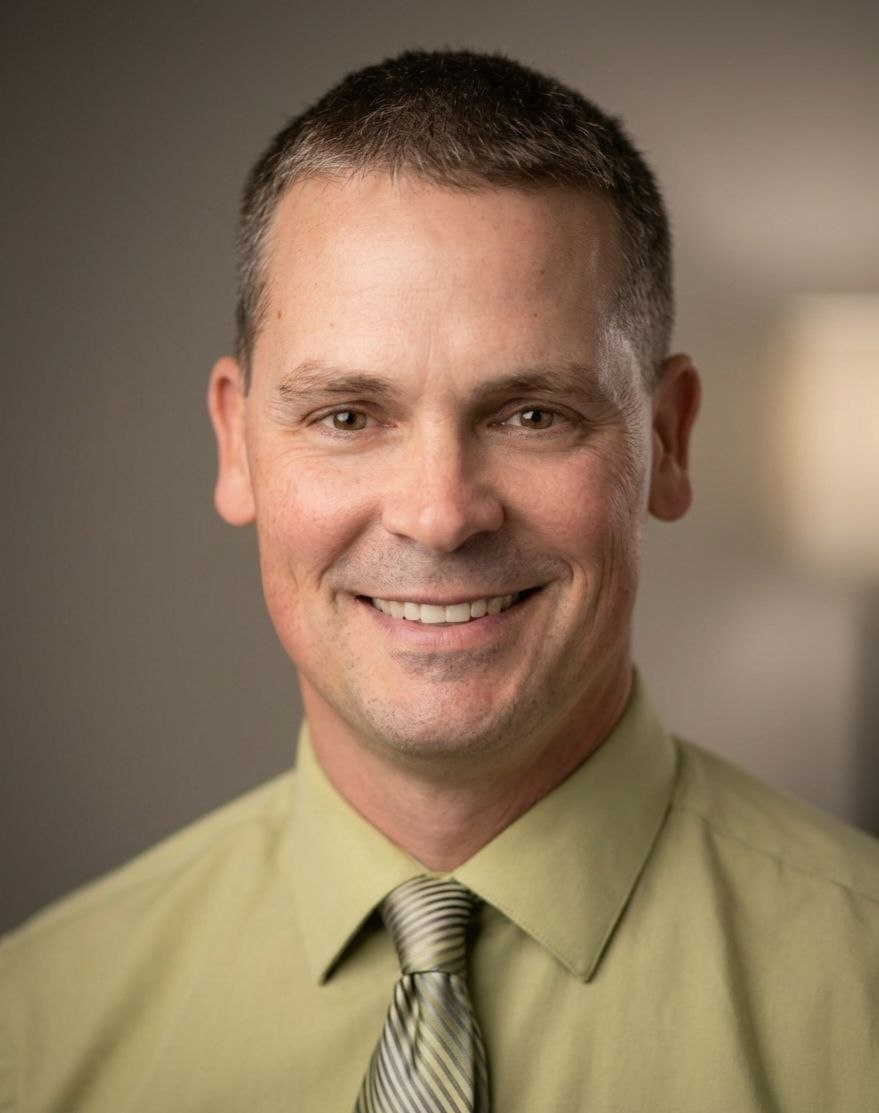
Cybersecurity operations leader and the founder bringing operationally proven security discipline to Omaha-area businesses — at the scale that actually works for them.
I'm a cybersecurity and leadership executive with over 20 years of experience leading security operations, building organizations under pressure, and translating complex security requirements into decisions that leaders can act on. My career has taken me from tactical operations to the highest levels of U.S. strategic command — and the through-line has always been the same: security only works when leadership owns it.
My most significant assignment was as Deputy Branch Chief for Defensive Cyber Operations — protecting national-level critical infrastructure against sophisticated adversaries, building the operational frameworks that govern how the Department of Defense defends its networks, and leading teams across a high-stakes, high-complexity environment where failure was not an option.
"The organizations that get security right aren't the ones with the best tools. They're the ones where leadership treats security as a stewardship obligation — not a compliance exercise."
Advantage Leadership Consulting was built on a straightforward observation: the frameworks that protect national infrastructure are the same frameworks that protect a 50-person manufacturing company in Omaha. The threat actors are different. The scale is different. But the principles — accountability, visibility, culture, discipline — are identical. What's missing for most small businesses isn't technology. It's the leadership architecture to make security programs stick.
I bring that architecture. Not as an outside auditor who drops off a report and disappears, but as an embedded fractional CISO who stays in the room — through budget conversations, through leadership resistance, through incidents — until the program is genuinely operational.
The career that produced ALC didn't happen in an office. It happened in command posts, operations centers, and boardrooms — where security failures have real consequences.
Led defensive cyber operations at the strategic command level, developing and executing frameworks to protect national-level critical infrastructure. Managed complex, multi-agency coordination across the Department of Defense's most sensitive cyber programs. This is the assignment that sharpened the conviction that security success is 20% technology and 80% leadership architecture.
Built and led the organizational system that certified Army cyber operators for mission execution — designing the training pipeline, readiness standards, and execution frameworks for one of the most technically complex career fields in the military. Translating operational requirements into training programs that produce measurable outcomes is directly applicable to how ALC builds client security programs.
Two decades of progressive leadership across cybersecurity operations, enterprise IT management, and organizational development. Assignments spanning tactical, operational, and strategic levels built a complete picture of how security programs succeed and fail across every organizational size and complexity level.
Bringing the frameworks that protect national infrastructure to Omaha-area small and mid-sized businesses. The mission: security programs that get adopted, because they're built on leadership principles — not just technical checklists.
Most security programs fail at the same place: the gap between what the technology can do and what the organization will actually sustain. Closing that gap is the work — and it starts with these three principles.
Compliance frameworks are floors, not ceilings. The goal isn't to pass an audit — it's to reduce the actual probability and impact of a breach. ALC engagements start with real business risk, not checkbox inventories. Compliance follows from a mature security posture; it's not the destination.
The most sophisticated security stack in the world fails if the CEO overrides the controls when they're inconvenient. Leadership accountability, clear ownership, and a culture that treats security as a business obligation — not an IT problem — are as important as any technical control. I build both.
A vCISO who shows up for 10 hours and hands you a report hasn't built anything. ALC operates on a stewardship model — ongoing accountability for program outcomes, not deliverable handoffs. The retainer structure exists because security is operational, not episodic. You need someone in your corner every month, not every year.
There are excellent cybersecurity professionals in Omaha. What's rare is the combination: deep technical security capability, genuine leadership development experience, and the discipline of operating in environments where security failures have immediate, serious consequences.
Security programs built for high-stakes operational environments don't allow for theoretical approaches. The adversaries are real, the stakes are high, and the leadership accountability is unambiguous. That operational mindset — not just certification knowledge — is what ALC brings to every engagement.
The PMP certification isn't incidental. Security programs are organizational change projects, and they fail when treated as pure technical implementations. Program management discipline — scope, stakeholder alignment, risk tracking, milestone accountability — is what separates security programs that ship from ones that stall.
Defensive cyber operations experience at the strategic command level — where the adversary is a nation-state and the stakes are national security. That context shapes how risk is assessed at any scale.
Built and led the readiness pipeline that certified cyber operators for mission-critical roles. The same program management discipline applies to every client security program implementation.
20 years of developing leaders under high-stakes conditions. The Leadership-Enabled Security Workshop isn't an add-on — it's the foundation that makes every other security investment stick.
Not a national firm with a local rep. ALC is a Nebraska business serving Nebraska businesses. The long-term reputation risk that comes with being in the same community is a feature, not a footnote.
Every ALC engagement begins with an honest 30-minute strategy call — no sales funnel, no obligation. Just a direct conversation about where your business stands and what a right-sized security program looks like for you.
Serving Omaha, NE • Iowa • Kansas • Missouri